
Getting the Most Out of a Tusheti Trip
Tusheti – the rugged, wild, mysterious mountain region of Georgia. It is a place that will steal your breath and captivate you with every turn and visit. Maybe you’ve heard about this region in whispers or maybe this is your first encounter with it. Regardless, keep reading for an understanding of how to get the most out of your trip in Tusheti.
FIRST, let’s talk about the road. For many years story after story of the dangers of this road have prevented many people from pursuing a trip to Tusheti. Yes, many tragedies have happened on this road over the years so it is important to be informed and prepared prior to one’s trip to what is quite possibly one of the most beautiful regions in Georgia.
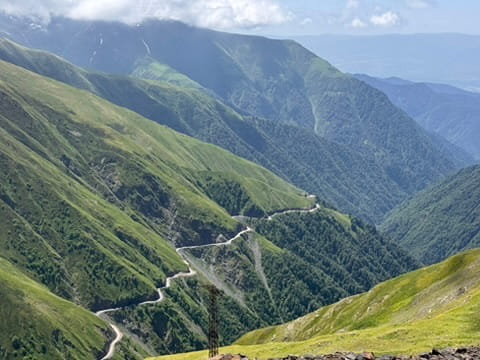
The road to Tusheti initially opened for vehicle traffic in the 1960s — before this time access to Tusheti was only possible on foot or by horseback. The road initially was very narrow and highly dangerous, but today significant work has been funded to make it safer, wider and more accessible for visitors and local Tushetians. Even within Tusheti itself, the roads have been greatly improved in order to make travel between villages and popular touring locations more accessible. Some villages still have no road access, while others received road access within the last two years; for example, Vestomta. Occasionally mudslides and/or rockslides occur, but these are usually cleaned by road crews within a reasonable timeframe. However, it is important to be cautious and patient if encountering any delays, and to plan for this early in the season (ie June) or after bad weather. Only when there is significant storm damage, affecting multiple sections of the road, access to/from Tusheti can be completely closed for extended periods of time (i.e. 1-3 days). Mountain weather can often change drastically without any warning, as has been experienced when crossing the Abano Pass (3000m). While the pass often grants some amazing views, it is also common for it to be completely covered in thick fog, significantly limiting visibility, or even start hailing. The weather can also differ from one side of the pass to the other. It is important to always be prepared for these changes and possibilities. It is our recommendation to hire a reliable, experienced driver. But if you choose to drive to Tusheti yourself, it is vital that you have a 4×4, high clearance vehicle and that you prepare in advance regarding fuel and tools required for any other possible vehicle abnormalities (i.e. flat tire, etc.).
That being said, when should you travel to Tusheti???
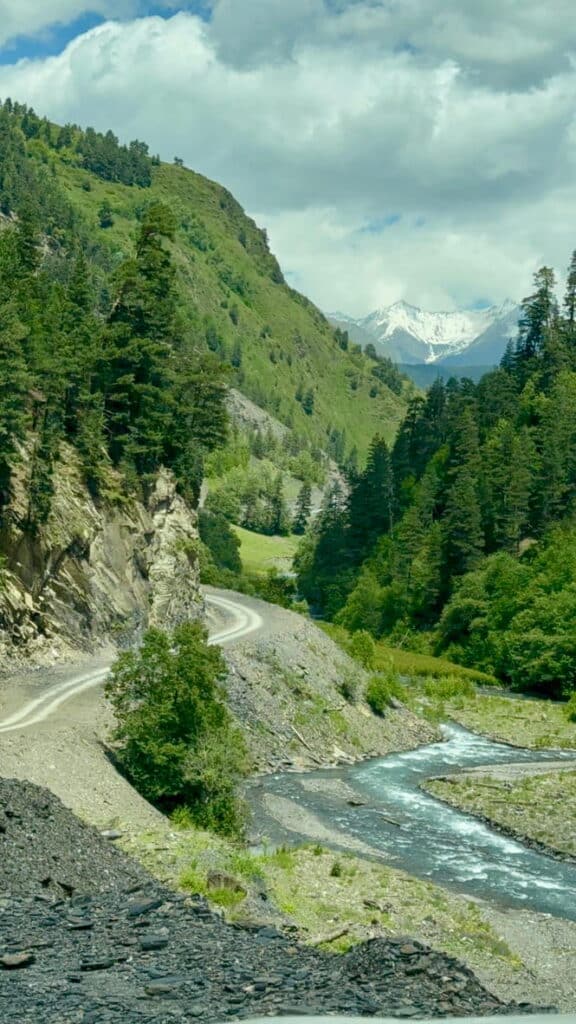
Due to the elevation of the Abano Pass and the presence of snow, the road usually does not open until early June, though this can also depend on the severity of the winter and quantity of snow fall. The government provides road crews to clean the road from June to October 1. Following October 1, accessibility to/from Tusheti is at your own risk. Most guesthouses work from June to September, though some will remain open into early October.
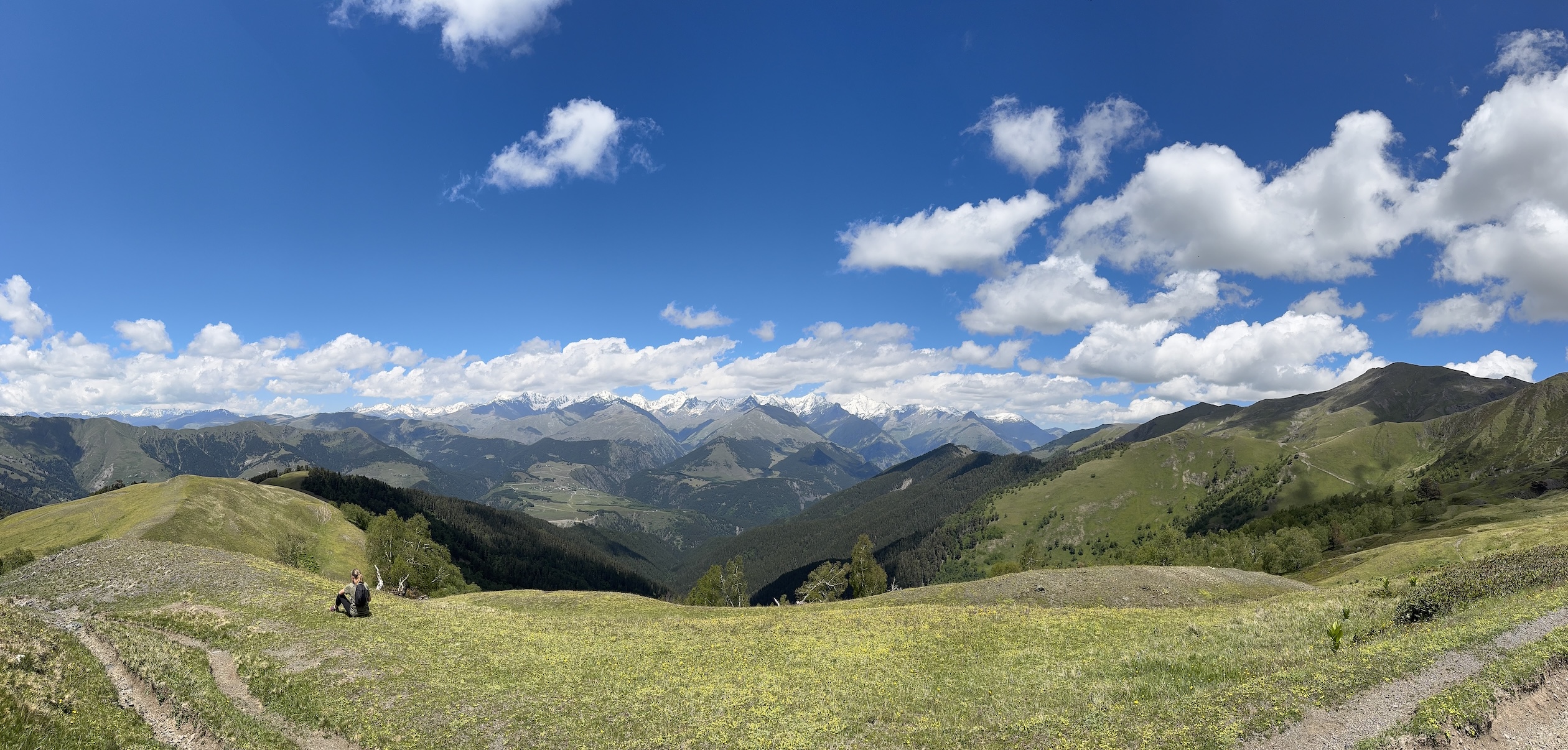
Each month of the season has its perks of travelling to Tusheti. June and September see the fewest visitors in Tusheti, and the nights are often very cold. In June everything is a lush green and the greater Caucasus are still covered in snow, providing some of the most beautiful panoramic views. July and August are warm (mid-20s Celsius/mid-70s Fahrenheit) with various wildflowers blooming both months. August is much drier and the green colors fade. These are the prime hiking months for the adventurers, especially if you want to through-hike to Khevsureti or Pankisi. In June the mountain passes are still covered in snow so these hikes are not possible. In September there will be fewer hikers along these trails, but the nights will be much colder. The rainiest seasons are often the first parts of July and September, though of course the weather can often be unpredictable. Late September and early October give the opportunity to see the beautiful colors of the autumn foliage.
What should you do when visiting Tusheti???
Often, people think Tusheti is only for the outdoor adventurer. While yes, it is true that there are many wonderful hiking options, there is so much more to see and do in Tusheti.
Touring Sites
The drive to Tusheti is all part of the adventure! Along the road you can make stops at a waterfall, various viewpoints, the sulfur medical baths, the Abano Pass (be sure to get a coffee from Daji and try homemade sweets), and Khiso Green Lake.
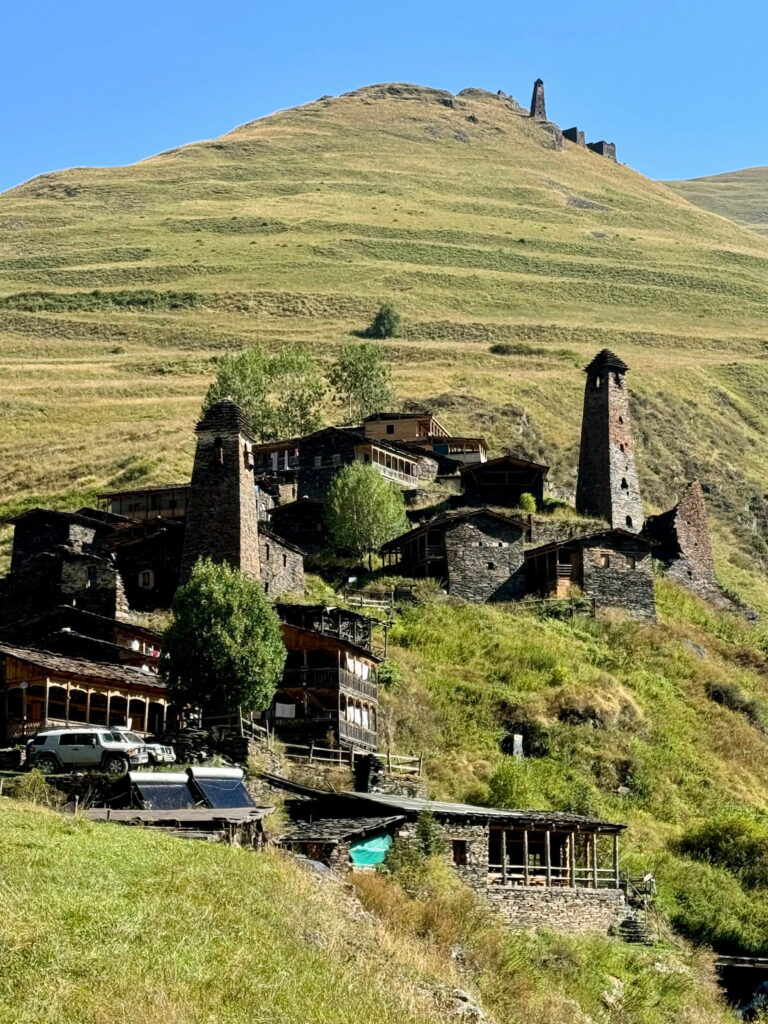
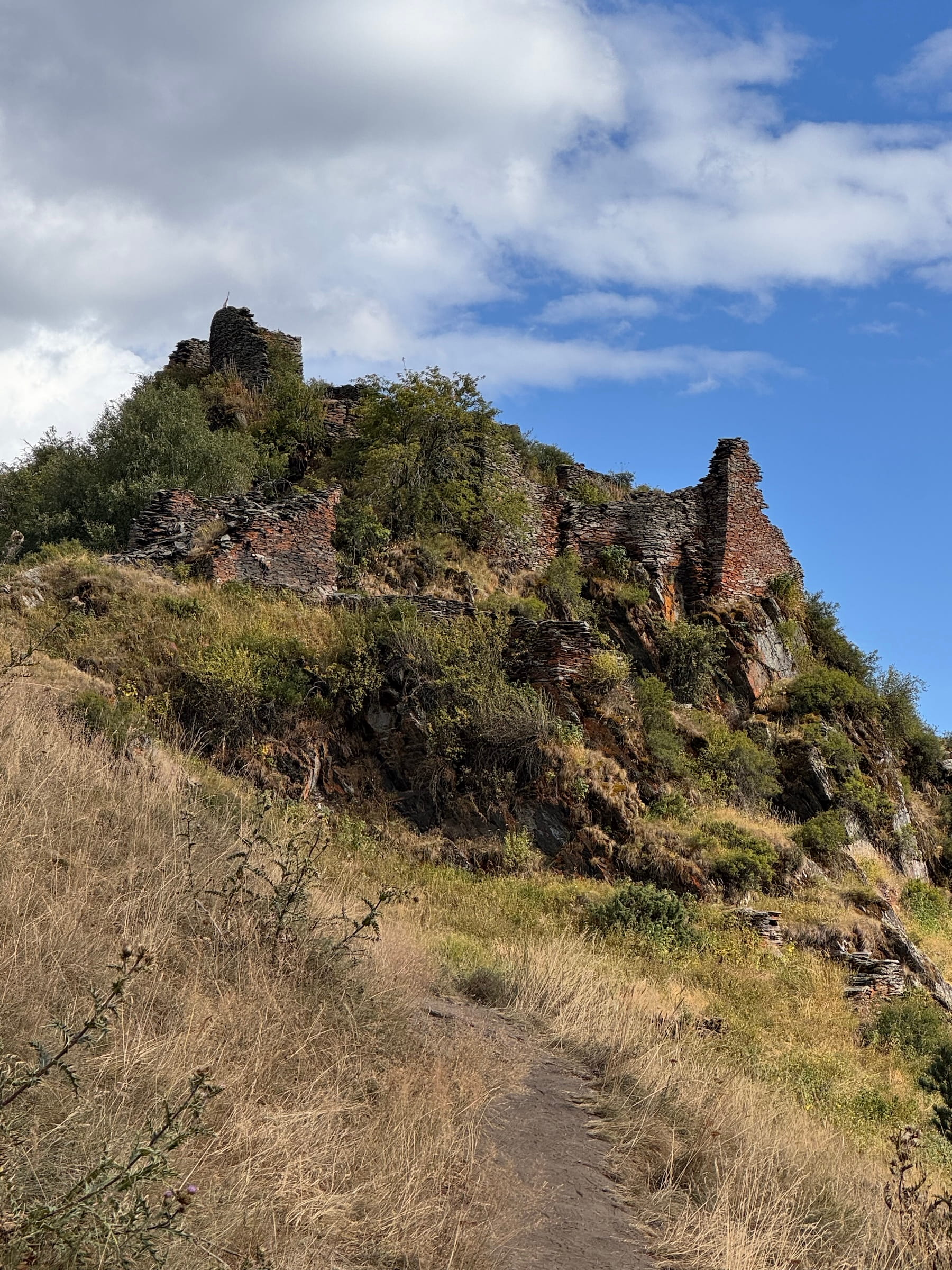
Once in Tusheti, there are many places to visit of great historical and cultural interest. The number of days you have to spend and whether you want to do any other outdoor activities will dictate how many places you visit. In the central Omalo area, a stop at the Visitor Center is worthwhile to gain an understanding of the history, culture, flora and fauna of Tusheti. A short walk from the center there is also a nice area for a picnic and an overlook towards the village of Tsokalta. In Upper Omalo the short walk to the Keselo Fortress which was preserved by a foundation started by a Dutch family living in Georgia. A short drive from Upper Omalo you can visit the Que Panorama vista point as well as Ghele, featuring 360 degree views towards Omalo, Bochorna, and Dartlo.
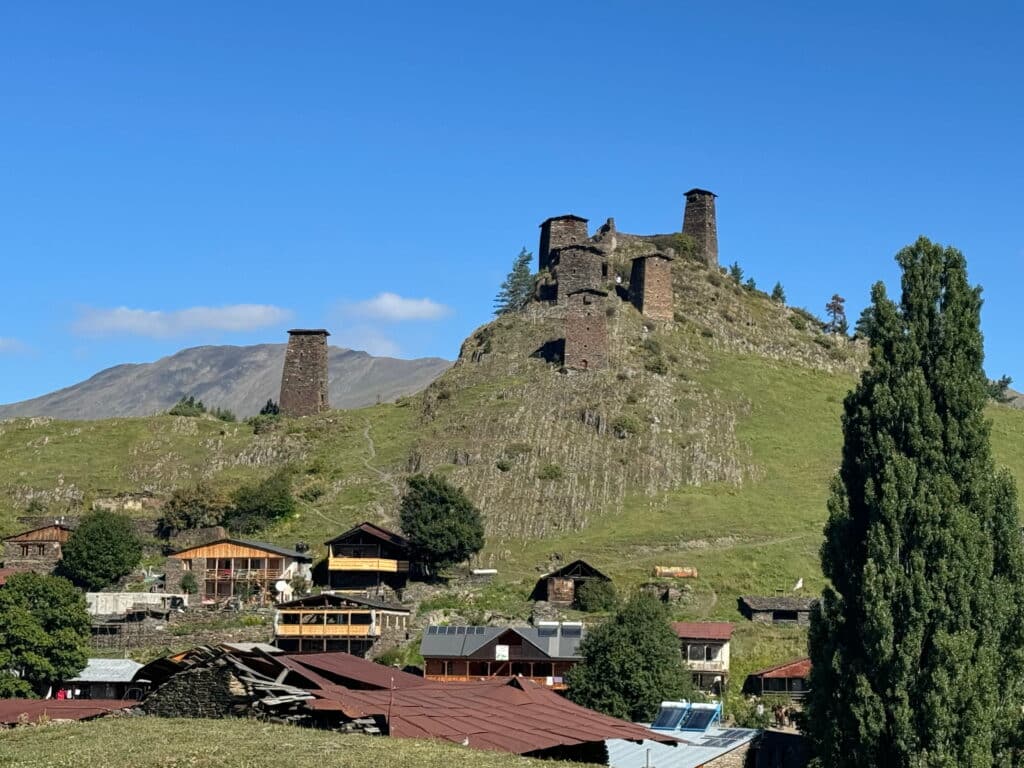
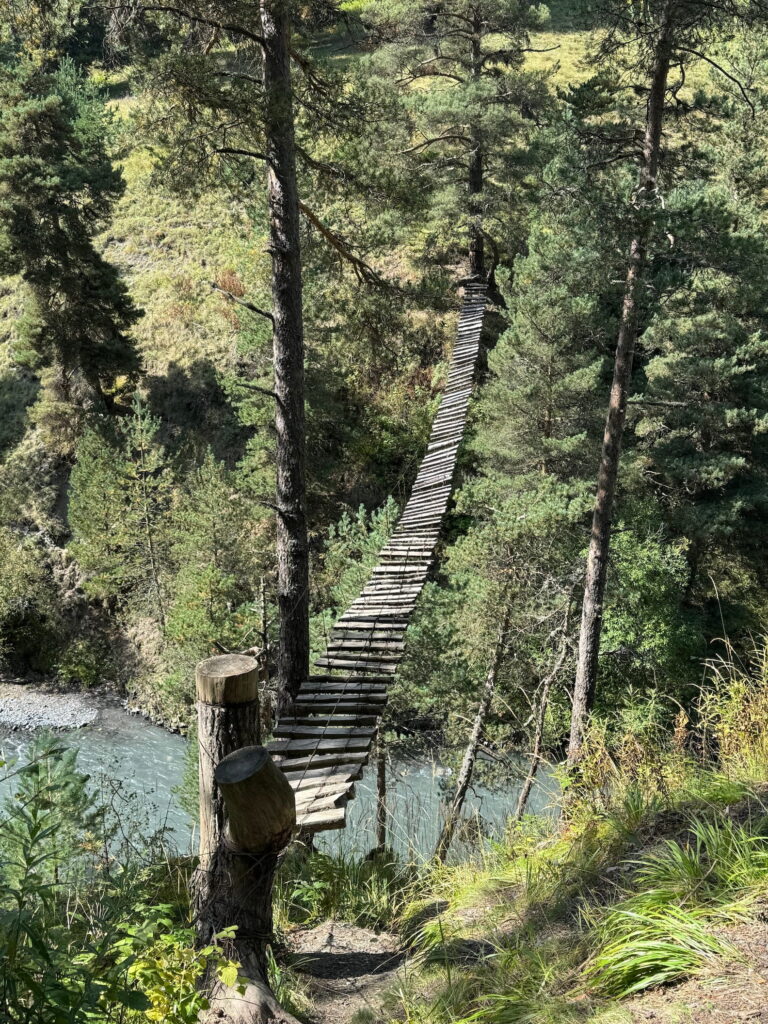
Other points of interest include driving from Omalo to Diklo to visit the original fortress ruins, stopping in Shenako at St. George’s church and the ruins of Ageurta village on the way to/from Diklo. A drive into the Pirikiti Valley features beautiful views of the Pirikitis Alazani River with visits to the towers of Dartlo village, continuing on to the the villages of Parsma and Girevi. In Pirikitii you will find the greatest number of mostly intact towers. Gometsari is more forested than the Pirikiti valley, the road following the Tushetis Alazani River, featuring beautiful views and stops at Bochorna village (hailed as Europe’s highest elevation village), Dochu village (requires hiking down to visit), the swinging bridge, St. George’s Church in Iliurta, and the Verkhovani waterfall.
Horseback Riding
Half-, full-, and multi-day options are available throughout Tusheti. There are several companies through whom you can book in advance, or you can arrange it with your guest house hosts upon arrival since there are many horse tour operators. Some of the most popular options are:
- From Omalo to Diklo – featuring a visit to St. George’s Church in Shenako and the ruins of Diklo Fortress
- From Omalo to Oreti Lake – featuring panoramic mountain views
- From Omalo to Sakheo – featuring beautiful views into two of Tusheti’s valleys
- From Omalo to Dartlo – featuring a visit to the towers of Dartlo
- Multi-Day from Omalo to Shatili
- Multi-day Pankisi to Omalo
Hiking
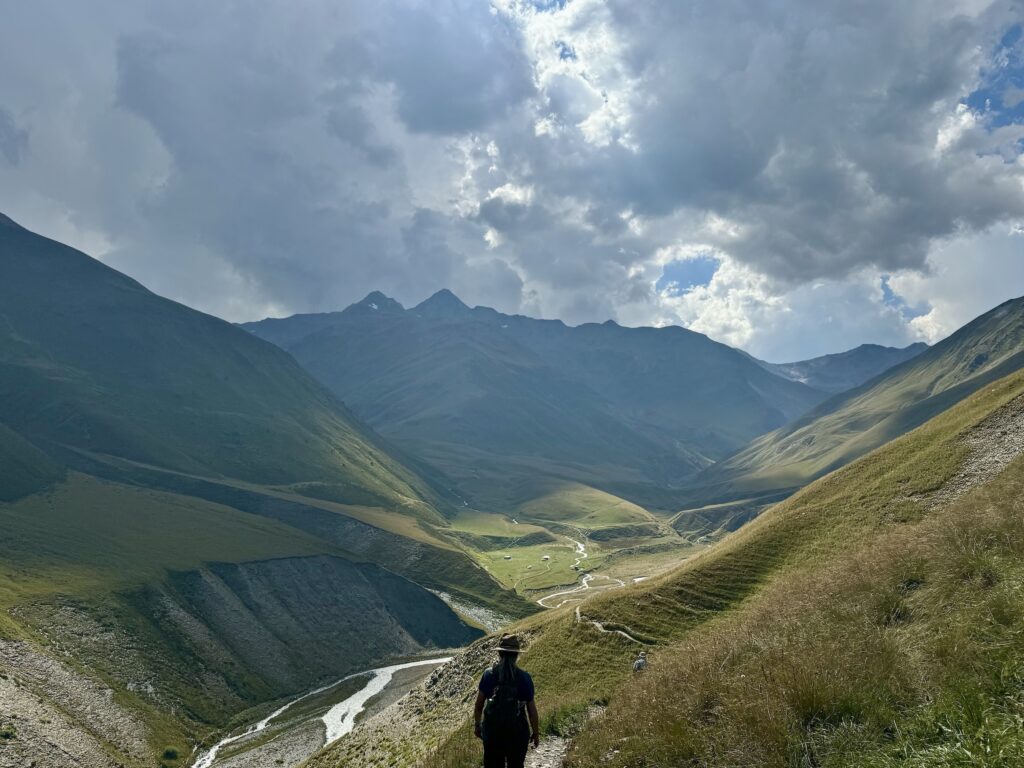
There are many single and multi-day hiking options throughout Tusheti for the avid hiker/trekker. While multi-day through-hiking to/from Khevsureti (Shatili) is probably the most well-known hiking option in Tusheti, it does require tent camping after departing Girevi village. NOTE: there is a new hut option but with limited space. For more information, check out our Trek Through Tusheti tour page! But you can easily hike in most of Tusheti and never pitch a tent, following other multi-day routes from village to village, staying overnight in guesthouses so a large backpack and camping gear are not necessary. Most guesthouses will prepare a packed lunch for you if you ask in advance. The most popular single-day hikes include Oreti Lake and Nakaicho pass (Omalo to Parsma).
While there are some trail signs in Tusheti, it is important to remember that Tusheti is a remote mountain region, so it is recommended to have a good mapping system (paper or downloaded) before embarking on any single- or multi-day hikes.
Cycling/Motorbiking
Tusheti is also accessible by motor bike or mountain bike, which has become more popular in recent years. There is the hope of having more mountain biking trails available in the future, but for now cyclists and motor cyclists can visit all the above mentioned places traveling by road from site to site or village to village.
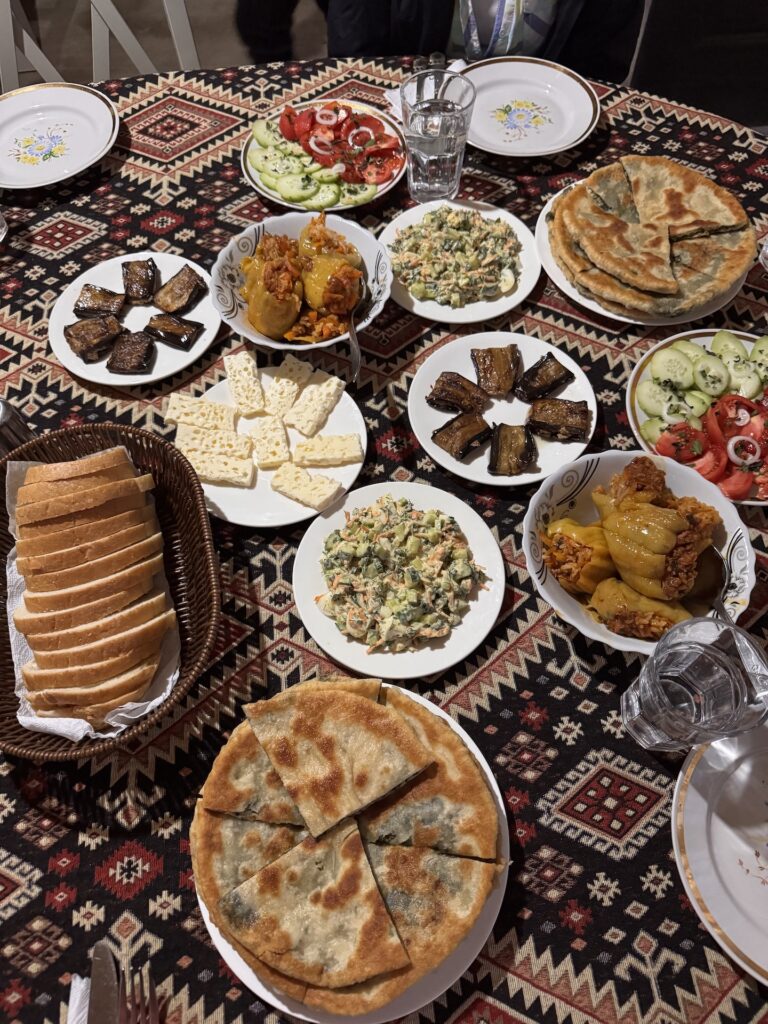
Eat tasty local food in a guest house or small cafe!
While Tushetians prepare and eat many of the same foods as you will find throughout Georgia, there are several dishes unique to Tusheti or have a local flare. For example, kotori is the Tushetian version of khachapuri (Georgian cheese bread) and khinkali are made more simply – without greens, using either beef or lamb, with the addition of caraway seed harvested in the mountains. While many people are not a fan, we recommend trying at least once the unique Tushetian guda cheese. It is a salty cheese made in the highlands, cured in the skin of a lamb, giving it a potent smell, but also a delicious taste. A cup of Kondoris chai, made from wild thyme that is gathered in the mountains in the summer, is the perfect way to end your day in Tusheti. You certainly won’t go hungry at any Georgian table, but especially as a guest in the home of Tushetians 🙂
The number one thing we recommend you to do???
Sit back and enjoy the silence, drinking in the natural beauty all around you!
Where to stay??
Of course there are many awesome places throughout Tusheti to camp, whether by tent or car. But there are also many guesthouses. The greatest collection of them are in the central part, Upper and Lower Omalo, but there are also guesthouses in Dartlo, Parsma, Girevi, Diklo, Shenako, and Jvarboseli. There may be others, but these are the main locations where accommodations can be found in Tusheti. Then again, you may just find a family that will open their home and host you for a night as well! Such is the hospitality of locals.
If you are planning through-hiking to Khevsureti, there will soon be option of staying in a cabin/hut at the Qvakhidi Shepherd’s Camp prior to ascending the Atsunta Pass and at the campsite on the opposite side in Khevsureti.
Camping is also permitted throughout Tusheti, whether tent or car camping. There are many wonderful vista points and other great locations along the river in both Pirikiti and Gometsari Valleys. I’ve also seen the odd 4×4 motor home of various Europeans!
How to Get There??
- Book a tour! Write to us today and we’ll take the stress of planning from you by organizing all the details!
- Hire a delica driver –
- You can travel from Tbilisi to Alvani by taxi, marshrutka, or personal vehicle
- In Alvani you can hire a Delica driver to transport you to Tusheti – if you make reservations with a guesthouse many will also have recommendations for transportation or can arrange the transfer for you.
- On Your Own – recommended ONLY in high clearance 4×4 vehicle and with personal experience driving on remote mountain roads
- Expect it to take MUCH longer than what Google says haha. From Tbilisi to Omalo expect a minimum of 6 hours, but often there are landslides or other weather related incidents that cause the road to be blocked. However, there are many crane operators who will work quickly to clear the roadway, but sometimes you can wait 1-3 hours depending on the extent of the slide/road blockage. Depending on the number of delays or stops you make or the amount of other vehicle traffic along the road, it could take 8 hours to drive from Tbilisi.
Items of Note when Preparing for your Tusheti Trip:
- NO PORK! is allowed in Tusheti. While multiple reasons might be given for this, the most consistent one is that for Tushetians Tusheti is considered a sacred place and pork meat is considered unclean. Thus it is important if taking any food items with you to ensure there are NO pork materials in them.
- Within Tusheti there are several sacred high places, to which women are prohibited from going. These are not always well marked and small are larger than others. Basically, anything that looks like a tiny rock structure is likely to be one of those places.
- Electricity in Tusheti is provided via solar panels…this means:
- Power outages are common
- Hot water is limited (if not heated electrically, the water tank is heated a fire built by your hosts, so it may take some time and again the amount will be limited). A good rule of thumb is to ask your guest house host when is a good time to take a shower. Usually this will be the evenings; don’t expect a hot morning shower.
- No hair dryers or other high output electrical devices are allowed (i.e. electric kettle)
- No heating
- Some guesthouses have wifi available, but it is not everywhere. However the cell service is pretty good throughout most of Tusheti
- If you want to start out early, don’t expect breakfast beforehand. Few guesthouses will serve breakfast before 9:00 am.
- Most guesthouses close by end of September, but some will remain open into October, until the sheep and horse migration to the warmer lowlands occurs for winter (usually mid-October)
- Bring supplies with you…There is one small shop in Lower Omalo where you can purchase snacks. A couple guesthouses will also have drinks and snacks available for purchase, especially in Omalo, but there are no places for purchasing staples or fresh products. The last stop for this is in the village of Pshaveli at the start of the ascending road to the Abano Pass.
- Water springs are available in many places, both in and outside of villages, so there is access to super clean mountain water. If through-hiking however, it is best to ensure you have plenty of water with you for your day’s hike.
- In Tusheti you will often encounter Caucasus sheep dogs, in the villages or as you travel by car and especially if hiking. Unless you are highly experienced in this area, it is not recommended to bring your personal dog along with you. If you see a flock of sheep, there will often be several dogs guarding them. Avoid going close to the sheep at all costs so the dogs do not see you as a threat. When hiking, it is recommended to carry a large walking stick or maybe even a rock. The shepherds are often close and generally will call the dogs, signaling to them that you are not a threat. Be wise and observant, especially as you hike in more remote areas.
- Fuel is basically unavailable in Tusheti. On occasion you can find and purchase from local guesthouses but at 2-3x the price. If you are traveling to Tusheti by personal or rental vehicle it is important to take plenty of extra fuel along with you.
- Driving etiquette:
- If a vehicle approaches from behind, be kind and pull over in a safe space and allow them to pass.
- If a vehicle approaches from the front, generally one car stops to allow the other to pass (except on wider parts of the road). Right of way is always given to the one ascending.
- If you pass someone, a light two taps of the horn signals “thank you”
So….WHAT ARE YOU WAITING FOR???
While these mountains aren’t going anywhere anytime soon, you should take advantage TODAY of the opportunity to start planning your unique customized tour in Tusheti, whether you choose to experience all there is as part of a cultural or adventure tour.