

Travelers often choose to base themselves in a central city, like Tbilisi, preferring to not have to change accommodations every day, but then it’s hard to know where to travel and what you can see without having to stay overnight in another location. The good news is, there is so much to see and do within a one day drive of Tbilisi, Georgia! We often get requests from individual clients, whether living in or visiting Tbilisi, as well as large conference/event groups regarding the best half- and full-day trip options from the city. These options still provide people with the opportunity to tour popular cultural and historical sites without the added hassle and expense of changing accommodations. Whether you want to visit historical UNESCO sites, do something outdoors and adventurous, or have a fun culinary/cultural experience, these 9 options can help you fill your time while staying in Georgia’s bustling capital.
1. Mtskheta – Georgia’s ancient capital and center of Christianity
This really is more like a half day trip and could essentially be added to numbers two and three below or combined with a walking tour of Tbilisi Old City, though it depends how many historical sites you’d like to visit and whether you’d like to have a meal in one of the cozy restaurants align the Mtkvari-Aragvi River in the city’s historical center.
Mtskheta is home to three UNESCO World Heritage sites, Jvari Monastery, Svetitskhoveli Cathedral, and Samtavro Monastery. Samtavro Monastery is often overlooked compared to Jvari and Svetitskhoveli, but has significant historical significance to the establishment and growth of Christianity in Georgia. On the property grounds is a small church initially built by St. Nino in the 4th century, when she travelled to Georgia from Cappadocia, bringing Christianity with her. The rulers of Georgia at that time, King Mirian III and Queen Nana, converted to Christianity and upon their deaths they were buried on the monastery’s grounds. The main cathedral was built in the 11th century, but underwent several restorations following various attacks and destruction by invaders.
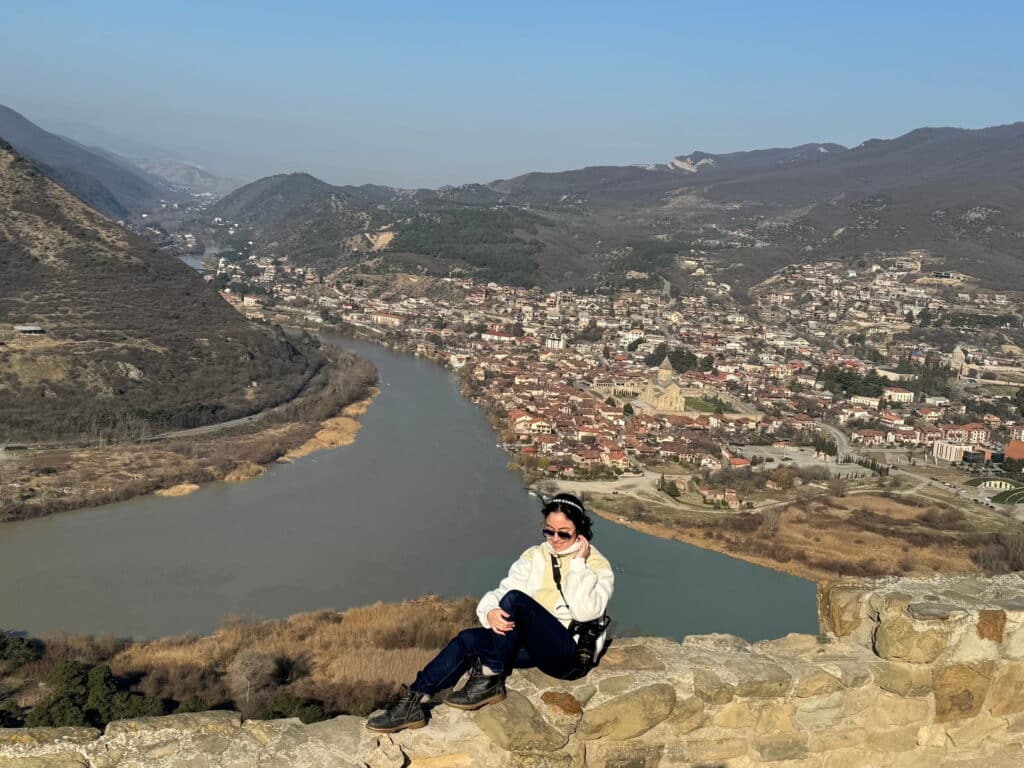
Jvari Monastery is iconic given its location up on a hill, visible to travelers on the highway from Tbilisi towards the west of Georgia. From Jvari one can enjoy excellent views of Mtskheta’s historical center,where Svetitskhoveli and Samtavro are located, as well as the convergence of the Aragvi and Mtkvari Rivers. It’s also an excellent place to watch the sunset and you’ll often see visitors trying to time their photo opps just right 🙂
ShioMgvime Monastery is less frequented by tourists, but is well worth the drive out of Mtskheta up into the hills to this well hidden monastery complex. The church on the complex has beautiful modern frescoes depicting significant Biblical events from the life of Jesus.
2. Kazbegi Region – see Georgia’s iconic Mount Kazbek
Kazbegi region is one of the most frequently visited areas in Georgia. Travelers flock to see the iconic Mount Kazbek and visit Gergeti Church. A Kazbegi day trip is probably one of the longest options from Tbilisi, given there are so many things to see and do along the way. We tell people to prepare for a 10-12 hour day from start to finish. From Tbilisi this day’s journey begins on the historic Georgia Military Highway, stretching from just north of Mtskheta all the way to the Georgia-Russian border. During the 19th-20th centuries this road was a significant route for trade and transportation through the mountains. The drive itself is beautiful and gives you a sense of how people previously travelled in this region. You’ll have beautiful mountain vistas the whole way and also see small villages perched along the mountainsides. There are several key places to visit along the way to your destination of the small cozy mountain town of Stepantsminda.
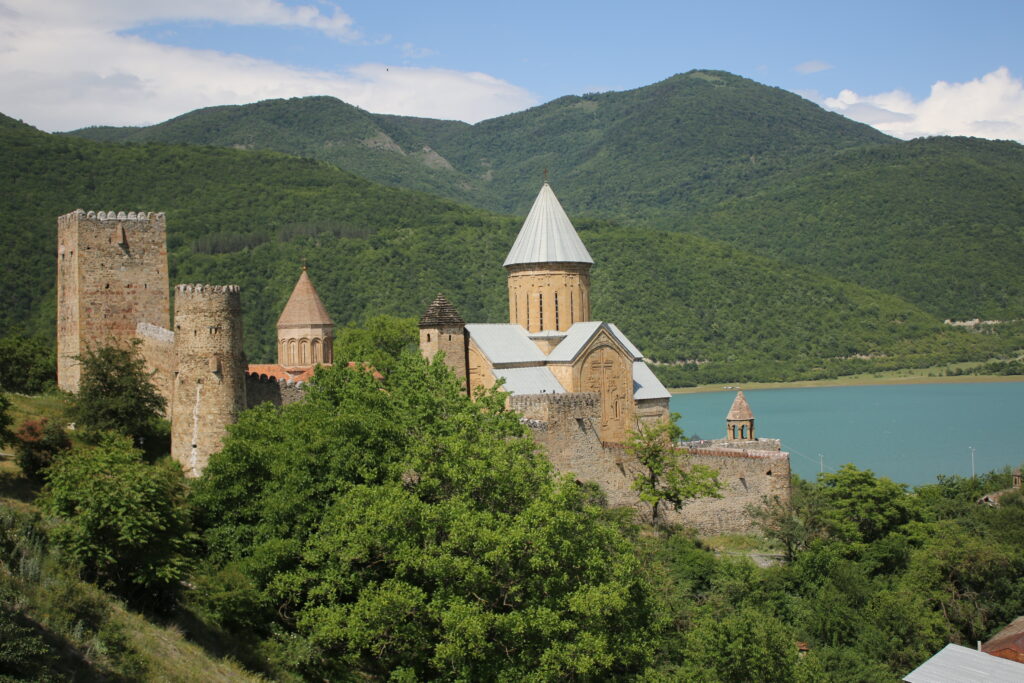
The first stop of interest is the 15th-century Ananuri Fortress Complex, perched on the Zhinvali Reservoir. Ananuri is a fabulous place to visit and explore – you can even ascend some of the towers and gain a better understanding of how the fortress’ inhabitants defended themselves from invaders. From these higher points there are also great vistas of the lake. For early risers, views from here at sunrise are excellent!
A little further along the road provides even greater views of the Zhinvali Reservoir as compared to what was visible from Ananuri. The overlooks at this little touristy souvenir hub provide panoramic views of the lake with rolling tree covered mountains in the background. It is especially beautiful in the fall.
The little town of Pasanauri is famous for two things: the convergence of the Black and White Aragvi Rivers as well as being titled the birthplace of khinkali. There are several great places to stop for delicious khinkali, among other Georgian foods, and in the summer months many people will come here for white water rafting and mtsvadi (meat kebabs) along the riverside.
The road becomes more windy as you ascend to the highest point of the day (literally!) at the Gudauri Panorama. Gudauri is one of Georgia’s most popular ski resorts in winter months and also a place of rest and outdoor excursions in the summer as people escape the lowland heat. Here there are beautiful panoramic views of the Caucasus Mountains for those who are outdoor photography enthusiasts.
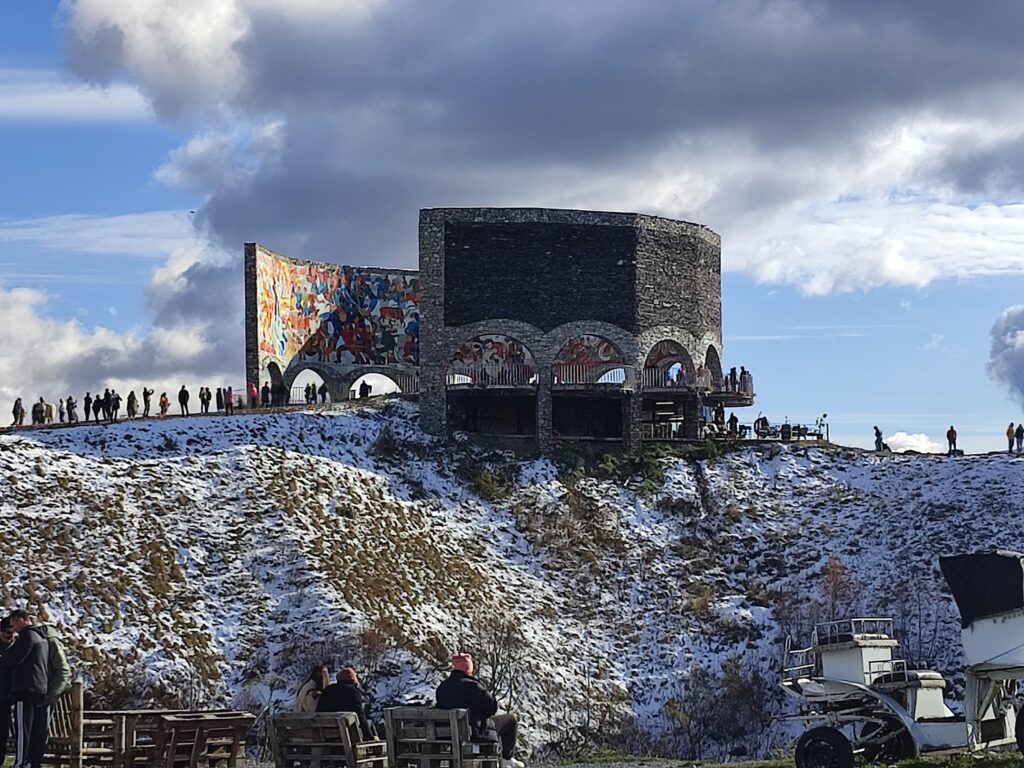
At Gudauri is also located the Soviet Friendship Monument, a unique structure built in 1983, commemorating the signing of the Georgievsk Treaty in 1783. This treaty was a pivotal moment in the history of Georgia and Russia and the monument was constructed to reflect this point in time. The stone semi-circular monument features unique murals of historical moments from both countries. Its location affords some of the most beautiful views of Devil’s Valley and thus is a popular stop for visitors.
The Military Highway continues over the Jvari Pass (2,395 m/7,857 ft), the highest point of the highway, then descends into the Darialli Gorge as you come into Stepantsminda. Passing through Stepantsminda, moving closer to the Russian border, the road continues along the Terek River, made famous in the writings of Leo Tolstoy and other classic Russian literature. The Dariali Monastery complex, though not a historical location, is a beautiful site as it is located nestled amidst the towering Caucasus Mountains.
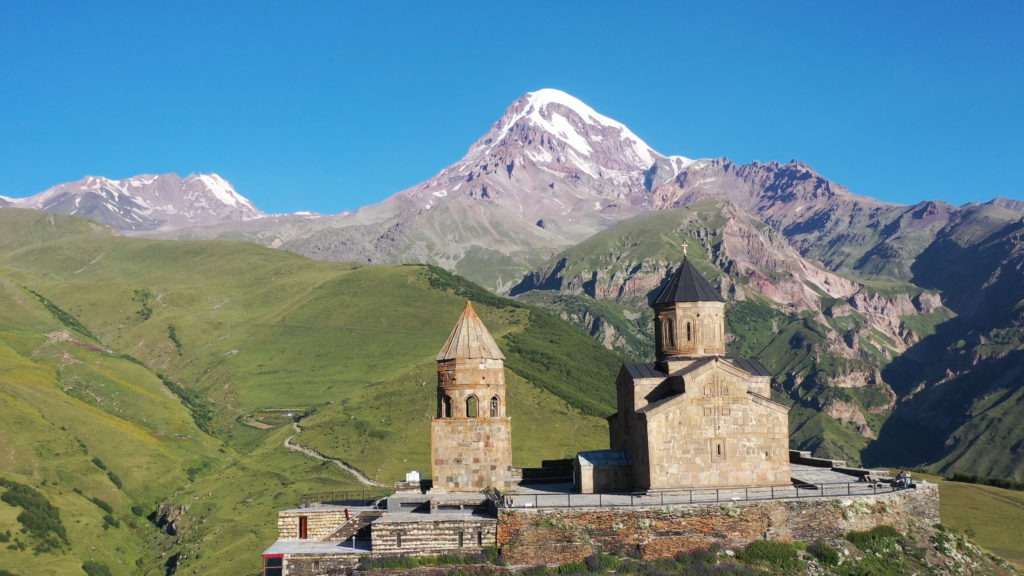
Back in Stepantsminda, there are many places for excellent views of Gergeti Church with majestic Mount Kazbek (5,054 m/16,581 ft) in the background. The drive up to Gergeti Church affords excellent views of Kazbek and from the church great views of Stepantsminda and Mount Elias, situated opposite Kazbek. This stop provides the best photo opportunities of the day.
Other places of interest in the Kazbegi region, should you have the time, include visiting the village of Sno to see the mysterious stone head structures and Sno Fortress; driving to the village of Juta to see Chaukhi Mountain, reminiscent of the Italian Dolomites; driving through the Truso Valley to visit Zakagori Fortress and see the unique, brightly colored natural travertines; or taking a hike of various lengths – be sure to check out our blog “Top 5 Day Hikes in Kazbegi” for more information!
3. Gori/Uplistsikhe – explore the Caucasus’ oldest cave city
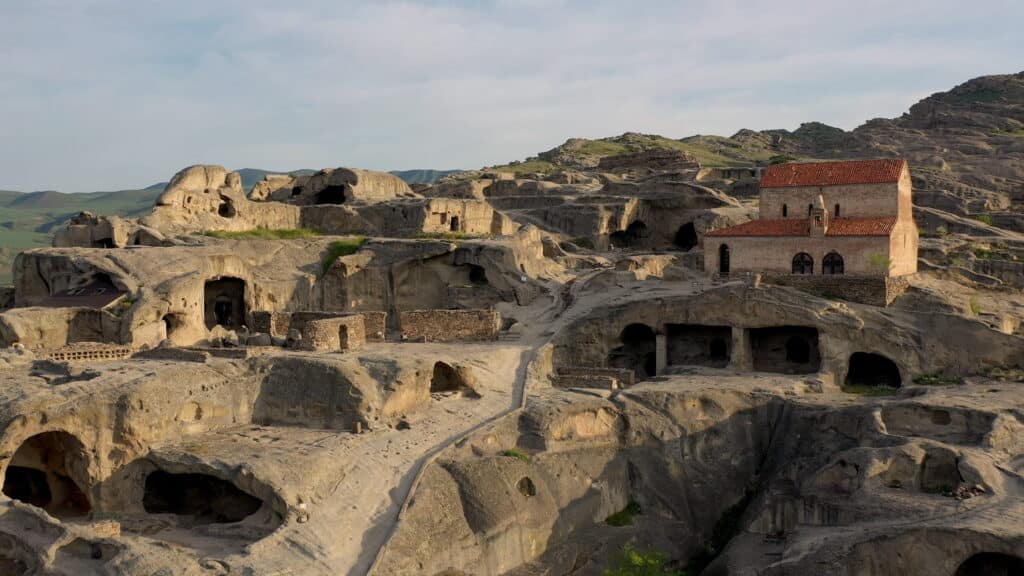
About an hour and a half from Tbilisi another popular destination is a visit to Gori, the birthplace of Joseph Stalin, and the nearby Uplistsikhe Cave City. For those who are interested in Soviet history, a visit to the Joseph Stalin museum can be arranged. But mostly, travelers prefer to visit the ancient Uplistsikhe, the cave city in Georgia. Actually, it’s considered to be the oldest urban settlement of any kind in the greater Caucasus region, with archaeological records indicating that people lived here as early as the 2nd millennium BC. Uplistsikhe was a trading point along the ancient Silk Road. “Uplis-tsikhe” means “Fortress of the Lord”, yet at one time this city was a center of pagan worship, evidenced by architecture from both pagan and Christian time periods with influence from from Iran and Anatolia, the Persian and Ottoman Empires respectively, who reigned over Georgia at various points in history. It is certainly a unique place to visit, but given its arid location under direct sunlight we recommend visiting in the spring, fall or winter months.
Kakheti is another famous, oft frequented region within Georgia. Kakheti is often called the “Tuscany of the East” because of its agricultural richness and focus on wine. The drive throughout this region is highlighted by surrounding foothills and rural charm. Kakheti is also historically rich so we ultimately recommend visiting over 2-3 days. But it is possible to arrange various day trips from Tbilisi, depending on your desires and interests. Here we will highlight a wine/culinary option and a historical sites option.
4. Kakheti – Georgia’s most famous wine region
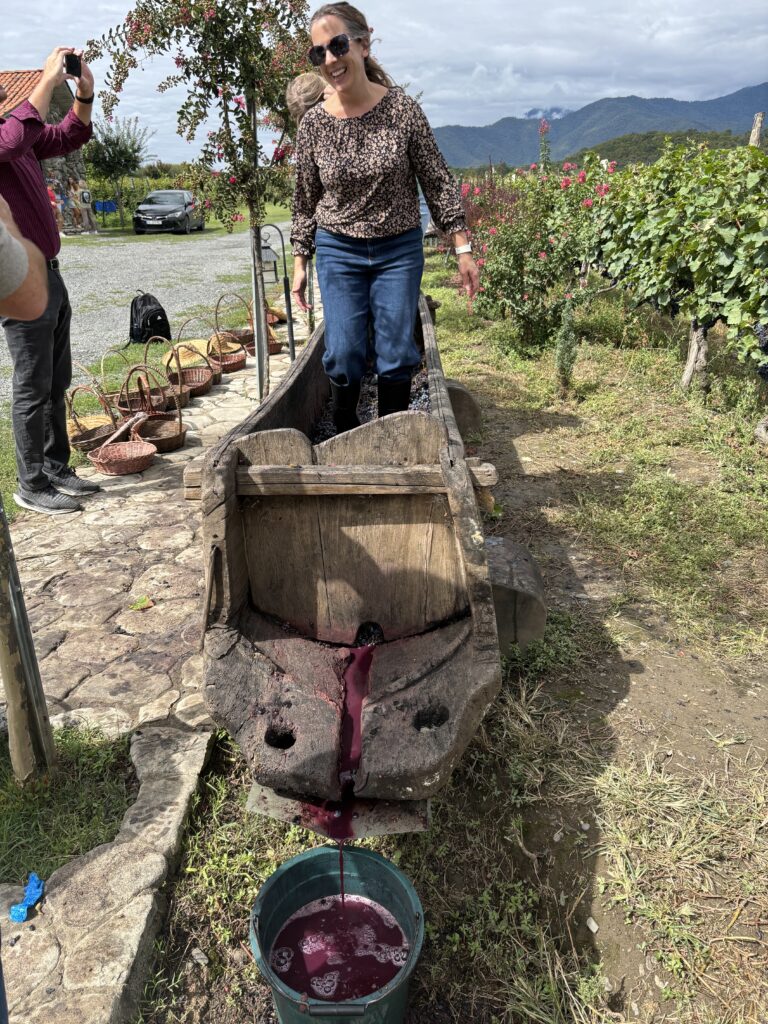
For the wine enthusiast, a trip to Kakheti, especially during the month of Rtveli (grape harvest) is a special treat. Kakheti is home to 80+ indigenous grape varieties and is mostly known for its dry wine varieties, both the popular red saparavi and the amber rkatsiteli. There are MANY small family maranis (wine cellars) scattered throughout the Kakheti region as well as larger wineries. Many continue to use the traditional Georgian wine making methods, but some have started using more modern European methods as well. Regardless, you have the opportunity to learn much about Georgian wine culture as you interact with winemakers. If your trip falls within Rtveli season, you’ll get to have hands-on experience in picking and stomping grapes, followed by a traditional Georgian supra (feast) with lots of traditional singing and toasting. On a wine tour you will get to visit and tour at least two wineries, observing traditional and modern winemaking traditions, and be led through tasting of select Kakhetian wines. Throughout the day as you drive through the Alazani River Valley you’ll have excellent views of the Greater Caucasus Mountains, first from a vista overlooking the charming town of Sighnaghi, and closing the day from the Gombori Pass as you return to Tbilisi.
5. Kakheti – Historic Churches & Sites
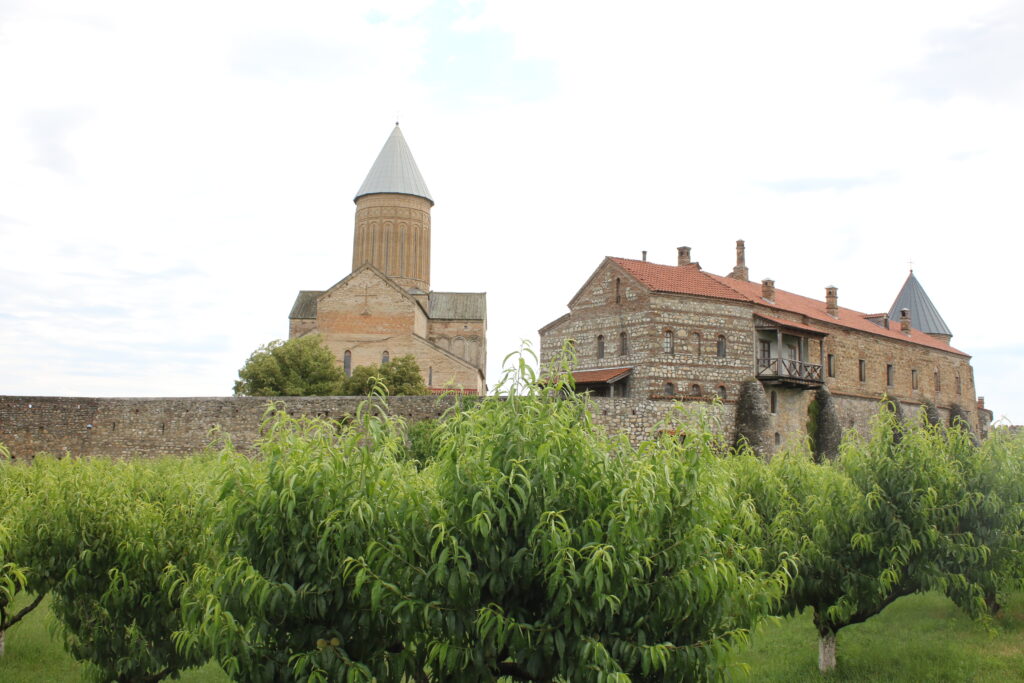
For those more interested in the history of Georgian and the Kakhetian Kingdom, a day trip will include visits to Bodbe Nunnery, where St. Nino is said to be buried; Nekresi Monastery Complex (pending time of year of trip – in snowy weather it is not accessible); Gremi Cathedral; Alaverdi Cathedral; the central charming town of Telavi, home to King Erekle’s palace; and Tsinandali Estate, the home of Ilia Chavchavadze who first introduced European winemaking methods to Georgia. Each location has its own unique story to tell as a part of the historical formation of the Kakhetian Kingdom and what we know as modern-day Georgia.
6. Kakheti – Sighnaghi & Cave Monastery
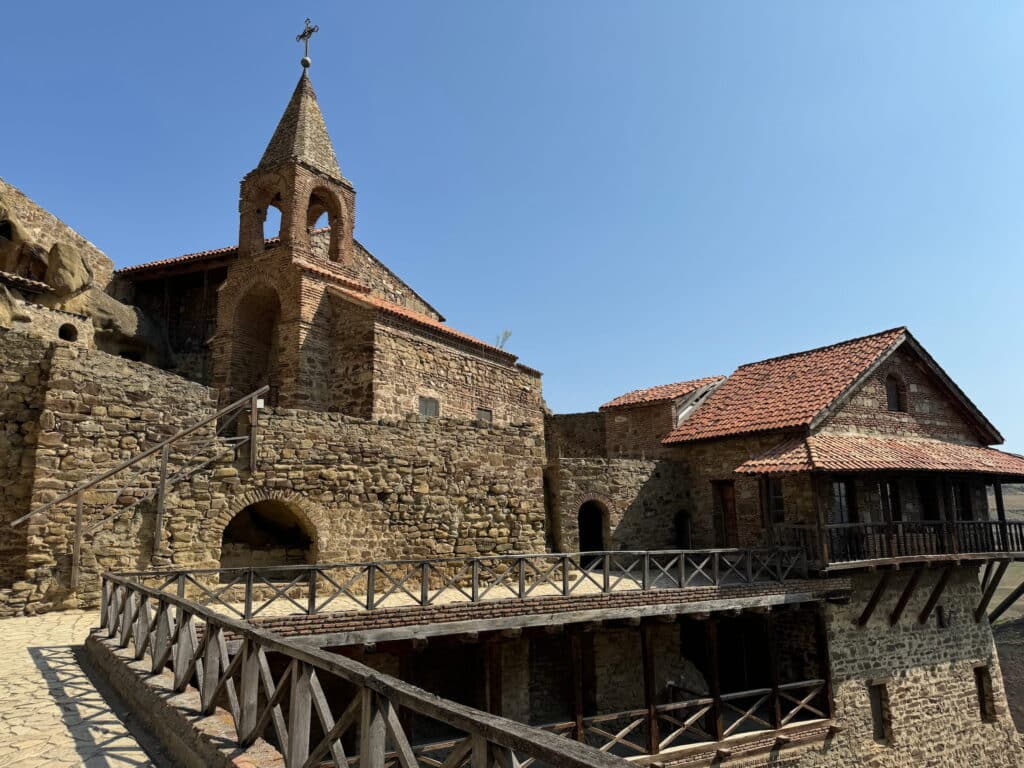
A third option within Kakheti Region is to visit the David Gareja cave monastery & Sighnaghi town. This would be a shorter day trip, but is a nice excursion out of the city. The cave monasteries were initially built in the 6th century by David Gareja and his two disciples, but in later centuries buildings and caves were added to the complex. Unfortunately because the entire complex is located on the Georgia-Azerbaijani border, only the Lavra Monastery can be visited from the Georgian side. After visiting the cave monasteries the trip continues to Bodbe Nunnery, the burial place of St. Nino, who brought Christianity to Georgia in the 4th century. After visiting Bodbe its a short drive into Sighnaghi from which there are beautiful panoramic views of the Caucasus Mountain range and the eastern end of the Alazani Valley. Sighnaghi is known as the “city of love” because of its unique mediterranean architecture nestled on the side of a mountain.
7. Dashbashi Canyon
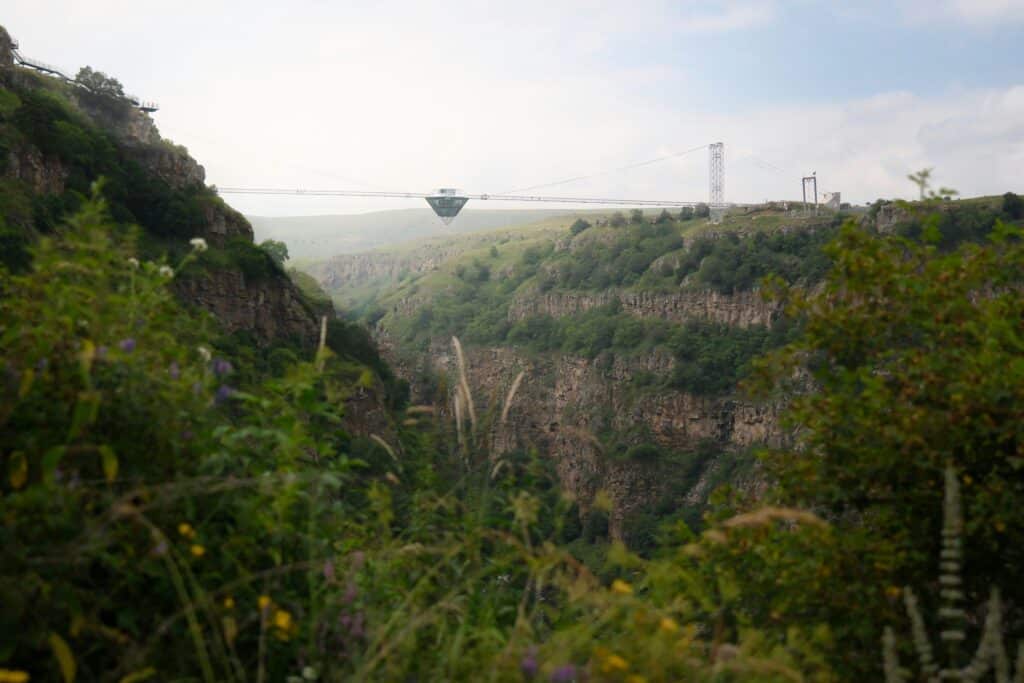
About an hour and a half drive from Tbilisi is the alluring Dashbashi Canyon. While most of the activities here are for outdoor enthusiasts, everyone is able to enjoy the simple walk across the glass bottomed bridge to the diamond cafe for panoramic views of the entire canyon. It’s possible to visit here during all seasons of the year. Dashbashi has several short hiking options, the most popular of which is in the bottom of the canyon to a waterfall. There is also the option of taking a zipline across the canyon for the adventure lovers. To make a full day we recommend a circular route to include visits to the German village of Asureti as well as the Didgori Battle Monument. This provides great countryside views as you drive along through this lower mountain range.
With the Armenian border being located approximately 1.5 hours from Tbilisi, there are even a couple options for day trips into northern Armenia, providing the opportunity to check another country off your list! Here we will highlight one outdoor adventure and one historical day trip for you to consider.
8. Northern Armenia – Historic Monasteries
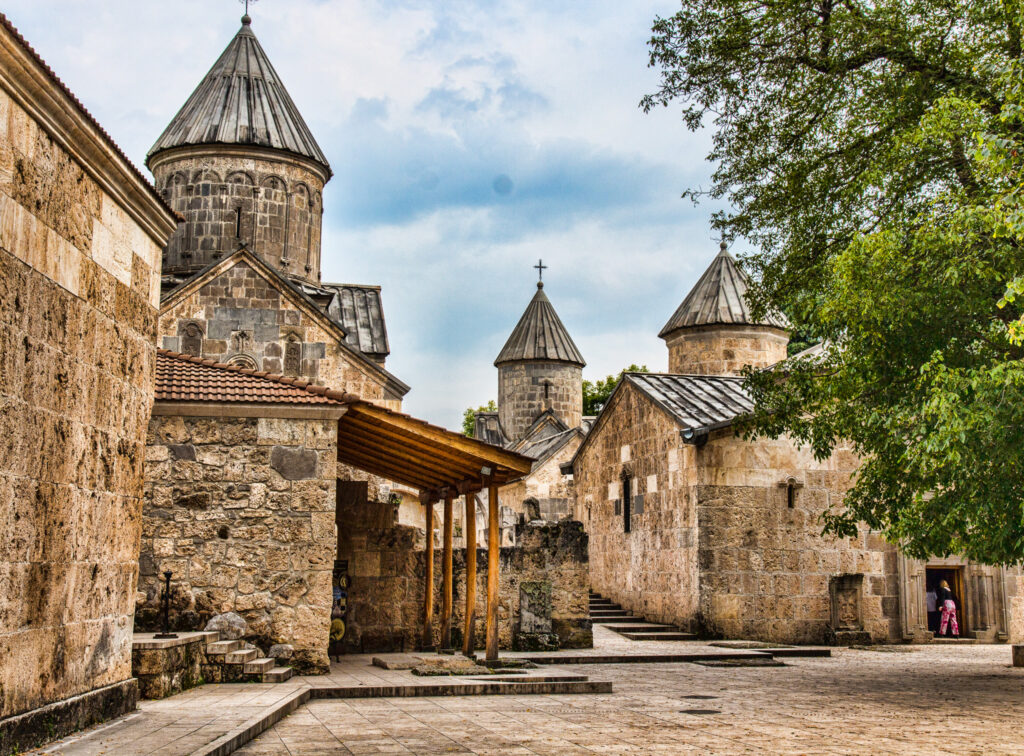
For those less inclined to outdoor adventures, a day trip to northern Armenia would include visiting three historic monasteries: Akhtala, Haghartsin, and Goshavank. Each has something unique to see, learn about, and experience. Akhtala was constructed in the 10th century, but was destroyed and reconstructed/renovated several times due to outside invaders. Though it is inactive today, it contains beautiful murals that were completed in the early 13th century. The Haghartsin Monastery Complex is believed to have been built from the 10th-13th centuries. On the property are three different churches among other structures and is still an active monastery today, holding services on Sundays. Nestled in the mountains of Tavush Province near Dilijan, Armenia, Haghartsin is quite the photogenic location in every season of the year, at times even giving a sense of mystery or magic to the beholder. Goshavank Monastery was also built in the 12th-13th centuries and is most known for having the world’s finest examples of khachkars, stone carved cross ornaments. Unlike most monastery complexes Goshavank does not have an exterior wall, but is instead surrounded by small village homes. Goshavank is also an active monastery.
9. Northern Armenia – White Water Rafting in Debed River Canyon
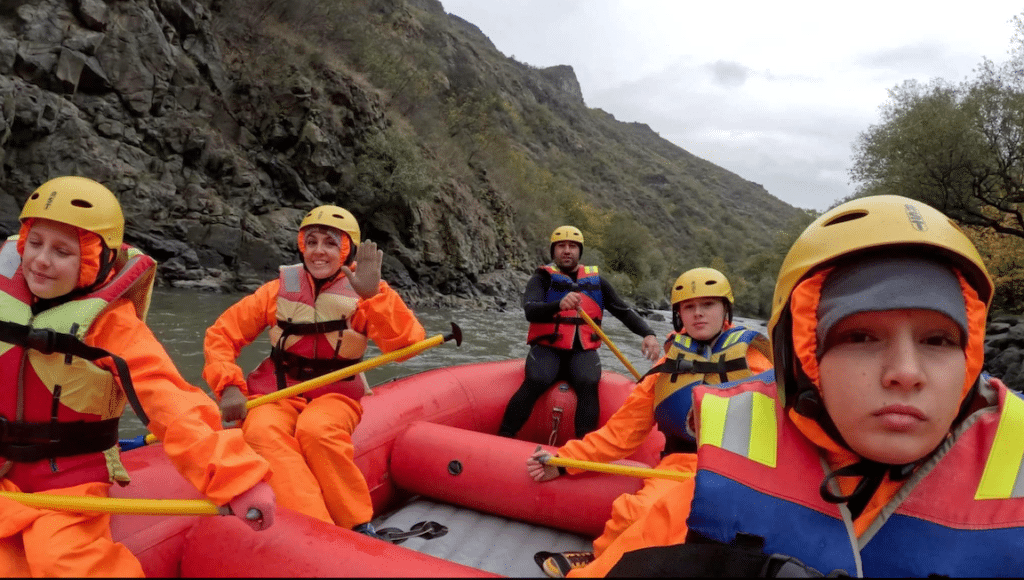
For the outdoor enthusiast, consider planning a day excursion for white water rafting in northern Armenia. The Debed River is a popular destination for rafting and is situated in a beautiful mountainous region near Lori, Armenia. The rafting season is from May to October, starting with class 4.4 rapids in the early season then transitioning to class 3 for beginners later in the season. This is a great family day trip to plan for some outdoor activity together. And you can easily add on a visit to the nearby Akhtala Fortress or simply plan for a nice outdoor picnic by the river before returning to Tbilisi.
It must be said that the drive through the mountains of Northern Armenia to these locations is absolutely beautiful so you won’t want for scenery and many great photo opportunities! While the winter season is much colder and often very snowy, it is possible to visit these monasteries in all four seasons of the year.
As you can see, there are LOTS of great options to fill your time while visiting Tbilisi, whether you’re in the city for a brief transit visit or staying for several days. Let us know in the comments below which one most piqued your interest, or maybe you’ve already visited one of these places so be sure to tell us what you most enjoyed about your experience! Better yet, contact us today to start planning your next single- or multi-day excursion in the Caucasus!